From Trust to Leadership: Creating Safe AI Ecosystems for Women’s Advancement
SATURDAY, DECEMBER 6, 2025
Author: Pranjal Diwedi
Location: Delhi ,India
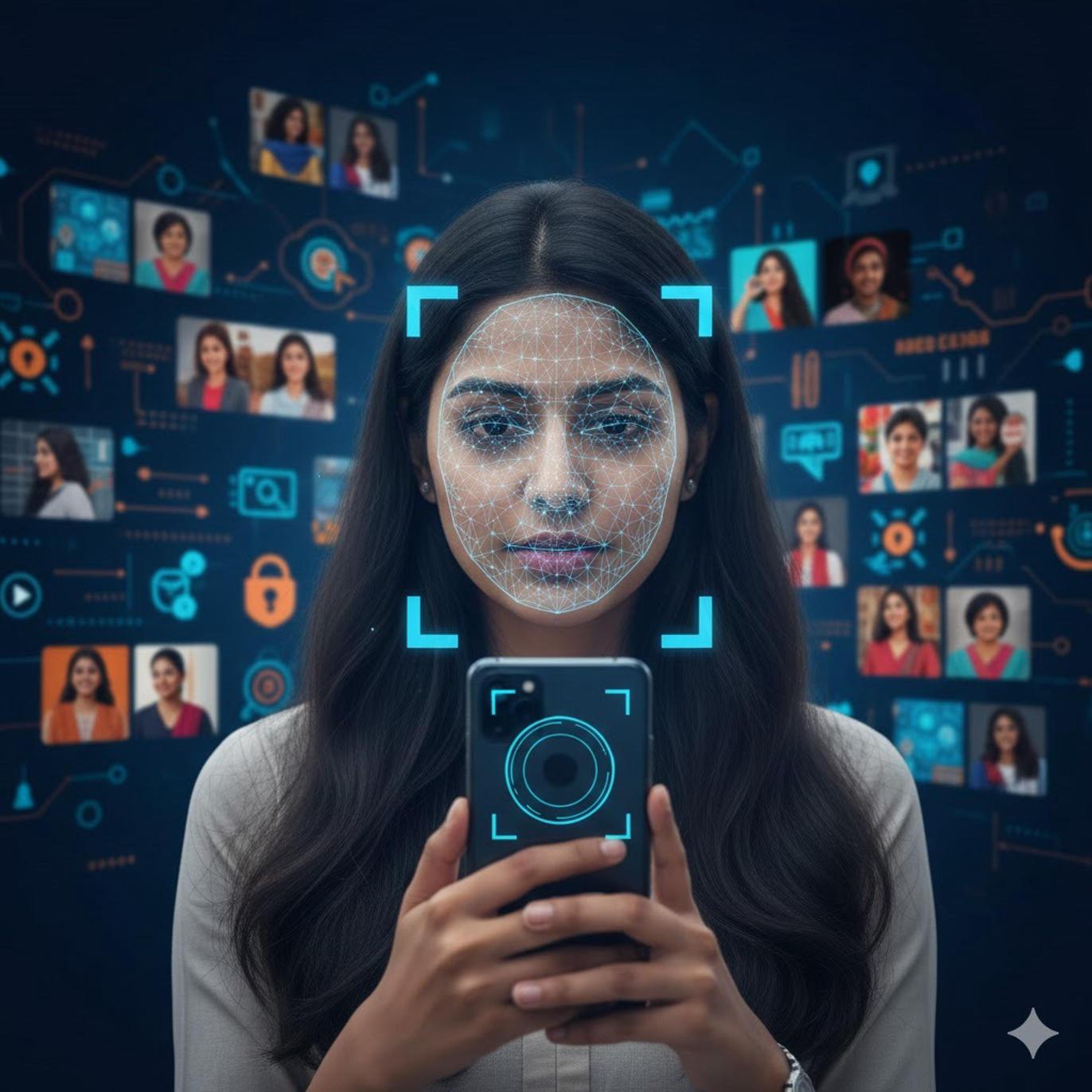
When technology evolves faster than societal safeguards, the first to feel its impact are often those least equipped to respond. Deepfakes hyper-realistic synthetic media created using AI have rapidly emerged as one of the most damaging forms of digital exploitation. In this landscape, women are disproportionately targeted, not because technology discriminates, but because existing structural inequalities amplify vulnerability.
A paradox defines AI’s role in women’s safety today: the same technology that enables manipulation also offers powerful ways to detect and counter it. The future of protection will depend not on resisting AI, but on enabling women to master it.
The Gendered Nature of Deepfake Abuse
Globally, nearly 95% of deepfake content involves non-consensual targeting of women. India reflects this trend. According to the Crime in India 2023 report by the National Crime Records Bureau (NCRB), cybercrime witnessed a 31.2% year-on-year increase, with cases of morphing, impersonation, and cyberstalking steadily rising.
This emerging threat carries three core challenges:
-
Psychological and social harm, often extending beyond the individual.
-
Legal ambiguity, with current frameworks under the IT Act and IPC not fully addressing synthetic media.
-
Low digital literacy, particularly among women, limiting both awareness and response capability.
The Systemic Gaps Creating Vulnerability
The problem is not simply technological it’s societal. According to the GSMA report, only 33% of Indian women use the internet, compared to 57% of men. Many women engage digitally as passive users rather than informed participants. Reporting channels are complex, law enforcement readiness is limited, and takedown mechanisms often lag behind harm.
This digital divide extends into the AI domain. While women constitute 43% of STEM enrolments, only 15% reach premier institutions like IITs and IIITs, and just 20% of India’s AI workforce consists of women. With only 1 in 10 AI startups founded by women, digital tools often fail to represent women's safety perspectives.
Existing frameworks are largely reactive. What’s required is a proactive, preventive model centred on digital literacy, safety awareness, and rapid response.
Using AI to Solve an AI Problem
Deepfake detection is at the core of this approach. While AI was once seen only as a threat, it is increasingly becoming part of the solution.
Key solution pathways include:
1. Prevention through AI Literacy
-
Building capacity before exploitation occurs is crucial. AI literacy empowers women to understand how synthetic media is created, recognise potential manipulation, and respond with confidence.
-
Yashoda AI is one such initiative that demonstrates this shift. In under a year, it has trained over 4,000 women across India through workshops, toolkits, and micro-learning formats. Its approach is built on three pillars:
-
Accessibility- Non-technical explanations with real-world examples
-
Localisation- Vernacular and voice-enabled learning to include low-literacy users
-
Safety-first education- Practical guidance on identifying manipulation and escalation steps
-
Unlike traditional digital skilling models, Yashoda AI frames AI knowledge as a life skill, not just a technical competence. Similar programmes by NCW, CyberPeace Foundation, and UN Women, Intel and Meta reinforce a growing shift from reactive safety to proactive digital resilience.
2. AI-Based Detection & Monitoring
AI must be part of the safety solution:
-
Use automated deepfake detection tools to identify manipulation before public exposure.
-
Move towards pre-upload content screening using multimodal AI (voice, image, and pattern analysis).
-
Encourage collaboration between tech startups, cyber experts, and civil society groups for content tracking and threat mapping.
3. Law Enforcement Enablement
Digital crimes require digital enforcement:
-
Train cyber cells and legal teams in AI forensics and synthetic media evidence handling.
-
Standardise AI-generated content recognition in legal processes.
-
Expand partnerships (e.g., CyberPeace Foundation, I4C) to create regional AI threat response units.
4. Platform Responsibility
Tech platforms must take proactive accountability:
-
Mandatory watermarking for AI-generated media.
-
Automated takedown triggers using AI monitoring.
-
Public transparency on deepfake cases and platform-led safety actions.
Policy Imperatives
India has begun taking meaningful steps to tackle AI-enabled digital harms such as deepfakes. The 2025 amendments to the IT Rules propose mandatory content labelling, metadata traceability and user declarations for AI-generated media, enabling verification and accountability. The Election Commission of India’s recent guidelines restricting synthetic media in political campaigning further signal early policy responsiveness.
Additionally, the IndiaAI Governance Guidelines (2025) emphasise responsible AI development, risk mitigation and identity protection—positioning synthetic content regulation within a wider accountability framework.
To translate these initiatives into impact, the next steps include:
-
Enforcing the 2025 IT Rule amendments on AI-content labelling, traceability, and proactive filtering.
-
Embedding IndiaAI governance standards into AI system design through risk reviews and accountability measures.
-
Introducing anonymised reporting mechanisms linked to CERT-In and cyber units, ensuring safe and confidential redressal.
-
Integrating AI safety and deepfake awareness into national programmes such as Digital India, Mission Shakti, and Skill India.
-
Scaling AI literacy initiatives like the Yashoda AI model, which have successfully trained thousands of women using non-technical, vernacular, and safety-centric formats serving as a potential national template to build grassroots readiness.
-
Establishing localised implementation models through district-level collaboration between women’s groups, administration, cyber officials, and technology partners.
-
Strengthening digital platform governance by mandating watermarking, synthetic content identification, and timely takedown compliance.
The Future: From Vulnerability to Leadership
As AI evolves, the response must go beyond protection to empowerment especially for women, who are most affected by deepfake abuse. This challenge is not just about preventing harm; it is an opportunity to equip women with the knowledge, tools, and confidence to navigate the digital world autonomously.
Once AI literacy becomes a norm among women, technology no longer represents an imbalance of power it becomes a means of self-defence, dignity and influence.
The next time a deepfake targets a woman, the response should not be fear; it should be her ability to detect it, her authority to report it, her capacity to counter it, and her courage to educate others. The future we all should strive for is where women do not merely survive the AI era, but lead it!
Blogs